skip to main |
skip to sidebar
"I love what I do."
How often do you hear people say these words? Maybe if you
spend a lot of time with motivational speakers, it’s commonplace. But no matter
how emotionally invested you are in your work, it’s easy to feel like something
is missing. After all, isn't putting "love" and "work" in
the same sentence akin to using "pleasure" and "toil” in the
same breath? Chances are though, if you like what you do, on a good day you
might actually feel some love for it. But is that passion for work life the key
to happiness?
“Choose a job you love, and you will never have to work a
day in your life.”
Surely this maxim will find it's way into many a graduate's
ear this spring. But can it be that are we setting them up for disappointment
by expecting work to feel like… not-work? As Chrissy Scivicque in Forbes
challenges, “It’s dangerous to suggest that work can be anything other than
work."
"That's why they call it work."
It's true that even those who have reached unimaginable
success at their would-be dream job would have to admit that, on some level,
work is still work. But perhaps after redefining our expectations of what work
should be, we can actually appreciate the happiness within. If you have ever
had a day where you wanted to swap positions with a happy-go-lucky sanitation
worker, maybe it’s the happy-go-lucky part you need to focus on.
"Labor of love."
Perhaps the answer lies somewhere in-between attitude and
aptitude. Once you know how much happiness you can reasonably expect from any
work, you see your own work in a different light. Start with the notion that
some component of work will always be, if not tedious, at least routine. A
farmer can still love to farm, even if he doesn't enjoy being at the mercy of
the elements. A doctor can love to heal the sick, but they also have to spend a
good portion of the day filling out paperwork. Remember that difficulty and
unpleasantness are a component of any job worth being passionate about. Being
in a position of authority can make these extremes even more marked.
So, is having a passion for what you do the key to
happiness? The answer lies not in blindly pursuing something you think might
make you happy; it's in deciding to approach everything you do, in and out of
the office, with passion.
 Chances are, as an executive on the go, your business style has evolved along with the latest technology. But for all of the time saving apps and platforms we have at our disposal, some have only clogged our daily to-do list more. Here are a few bad habits to break if you are looking to simplify your schedule.
Bad habit: being trigger happy for meetings
Whether we do it ourselves, or rely on an assistant keeping the daily calendar, sometimes we schedule more meetings than we really need. How many times have you gone to a project status meeting, full of people, only to find that nothing has really changed? Think about who really needs to attend and avoid inviting everyone “just in case.” That’s what a good note-taker is for, so that updates can be shared via email.
Bad habit: being a slave to your inbox
Do you answer your emails one by one as they come in? The constant bleep of a new message can be a huge distraction as you try to accomplish the task at hand, and it can take precious minutes to recover your train of thought. One email can easily send you off on a tangent that suddenly chews up an entire hour. Schedule “mail time” into your day, rather than trying to keep up with your inbox all day long. Utilize your email filters and folders to do some of the work for you. Or better yet, have a trusted assistant monitor and prioritize your inbox.
Bad habit: being vague with your availability
One of the best things you can do as a leader is to make it clear when you are and are not available to chat. A closed or open door is sometimes all you need to send the right signal, but if you work in an open concept office, this can be tricky. Set a precedent by giving people a visual that shows them when you are not to be interrupted: turn on a certain lamp, wear headphones, position your chair towards privacy. You can even have fun with it, setting that teddy bear from your daughter on your desk to ward off those who might break your concentration.
Bad habit: being preoccupied with social media
Whether you have been on board with Facebook since day one, or are a novice tweeter, it’s easy to get caught up in online conversations that might have nothing to do with the business at hand. Set aside time to give yourself a mental break from work, to drop in on conversations that are easily flagged for follow-up later. If you find yourself addicted, most browsers have tools that will place a limit how much time you can spend on a certain site through the course of your day.
We spend a lot of effort measuring the productivity of our teams. Try to spend a set amount of time each day improving your own effectiveness. As you look for bad habits to eliminate, take the last 10 minutes of your day to journal your productivity. Finding out where you lose time during the day can give you a valuable insight into planning your day ahead.
So much of efforts in recruiting and retaining employees focuses on salary, benefits, and other perks, that often one of the most attractive aspects of your company goes unnoticed: it’s your office layout.
With changes in the workplace, many are re-visiting office space design, hoping to provide an increasingly appealing space and collaborative culture in which their teams can conduct daily business. Office walls are literally coming down, foregoing traditional cubicle rows with open community space. The New York Times recently reported that “two-thirds of American office space is now configured in some sort of open arrangement.”
Last year FastCompany wrote that digital culture has played an important role in our move away from walled in offices. The article states, “A traditional office layout is designed to communicate power among certain individuals and barriers between departments. This does not support the collaborative ethos which is intrinsic to the web.”
Certainly instantaneous sharing has shifted the way we view the workspace. But additionally, open concept offices boost morale and can be just plain fun, as seen in the notoriously over-the-top design at Google headquarters.
Of course, for most of us, creating an enjoyable environment doesn’t necessitate playground equipment. It can be something as simple as relegating the room with the best view, previously reserved for top brass, as a communal space, as The Kindness Revolution author Ed Horrell suggests in this piece for Custom Service Manager.
At this point you might be thinking, “You mean give up my corner office!?” Actually, it’s not just lower ranking employees who are seeking out open spaces. Many of today's most successful CEOs are finding that a private office keeps them isolated and unaware of the actual daily work, and unable to get the pulse of their team. Instead some are opting for cubicle life or collaborative spaces. As reported in Forbes recently reported, top CEOs like Tony Hsieh of Zappos, Meg Whitman of Hewlett Packard (and formerly eBay), Klaus Kleinfeld of Alcoa Pittsburg, and even New York City Mayor, Michael Bloomberg, prefer working shoulder-to-shoulder with their employees.
Of course all of these scenarios are reliant upon other factors, such as the type business you run, and how your brand needs to be conveyed. But even in the most conservative and professional offices, there are ways you can make your office layout more fun and practical for your employees. And who knows? You might like it so much that you’ll want to join them.
 It’s happened to any of us in a management position. You’ve gone through a few rounds of interviews, and find yourself needing to make a decision between one of two very different candidates.
One candidate has a strong resume demonstrating years of experience in your industry. He has all of the skills and qualifications you could expect, and you know he could hit the ground running.
The other candidate is younger, and hasn’t held positions that would translate directly to this role. But she’s been successful at every turn. Your gut says think that in a few years you might really be kicking yourself for having passed on her.
Which do you pick?
Hire for your objectives, and for theirs
Of course, there’s no one right answer, but the first thing you should do is take a look at your organization’s objectives.
Is there a time-crunch causing you to need immediate help? Are you launching a new product? Is this a highly skilled technical role? Then you’ll probably lean toward hiring based on experience.
However, if your company has a strong mentorship program, is growing steadily and looking long-term, or more interested in innovation, then the candidate with potential might be the way to go.
It’s not all about your needs, either. Take a long look at what the candidate will want to get out of this role, as well.
Make sure your company’s values align with theirs. Consider whether one candidate is a stronger cultural fit for the organization. Be certain that they will have all the tools they’ll need to succeed, whether they have the experience or the potential.
Watch out for red-flags
Experience and potential aren’t always positives. If that first candidate spent fifteen years in a position, was it because he had no motivation to rise above? Did he lack the skills to take his career to the next level? Does he limit his problem-solving abilities by resorting to tried-and-true methods he’s relied upon over the years?
Conversely, potential is always difficult to measure. Her high GPA doesn’t necessarily translate to intelligence. Someone possessing the ability to rise to her potential will already have demonstrated the ability to stand out from the crowd; she’s done more than her peers of a similar age and background. You don’t know that she’ll have the dedication to stay with one organization long enough for your investment to pay off.
Final considerations
Many employers will look at those red-flags and err on the side of experience. Hiring for potential is a risk, but not everyone has it. Experience happens over time, no matter what.
A short-term, safe approach may stagnate your company, as well. Ideally, you’ll have a mix of experience and potential on your team. The attributes complement each other, and both sides of the spectrum will have something to learn from the other.
Most importantly, make sure the candidate wants to do the work that comes along with the position. It sounds obvious, but whether your candidate has the experience or the potential, the most successful hire will be the one who is willing to do whatever the job requires.
 Staying ahead of the curve is tougher than ever. In fact, sometimes it’s all you can do to keep up with changing technology. In an ideal world, you’d hire a person who does one thing really well, and they might do that one thing for their entire career. Staying ahead of the curve is tougher than ever. In fact, sometimes it’s all you can do to keep up with changing technology. In an ideal world, you’d hire a person who does one thing really well, and they might do that one thing for their entire career.
The skills you learned in school that got you that first job may have been applicable for several years, but that’s not the case anymore. From advertising to Zamboni repair, technology requires us all to be in a continual state of learning.
Henry Ford said, "Anyone who stops learning is old, whether at twenty or eighty." What was true then, is even truer now. Creating an environment where your employees continue to learn shouldn’t be thought of as merely a perk. It should be considered a must. And in our ever-changing business climate, it is a win-win. Here’s how to make learning work for you and your team:
Retain
Offering continued education is a great incentive when you’re hiring. It’s also an excellent way to retain the people you already have on board. Your best employees want to stay at the forefront of your industry, and to keep their skills sharp so as to contribute at a high level. If you’re not providing that opportunity or encouraging them to do so, they may go elsewhere. When you consider the cost of hiring and training someone new, you are better off investing that money in members of your existing team. Someone who wants to learn more is someone you want to keep. Facilitating their growth shows that you value your employees, and gives them something to value in return.
Reward
Team chemistry is vitally important to the success of any business. Be sure to reward those employees who express a desire to share what they are learning during their course of education. When you offer tuition reimbursement, you are in a sense, paying to have that knowledge imported and spread throughout your business. One enlightened employee can share their newfound wisdom at internal seminars, workshops, and training sessions, saving you money from having to hire outside contractors and instructors.
Revitalize
Tomorrow’s must-have skills are built upon the innovations of today. A recent article in Fast Company points out that thriving in today’s unpredictable climate requires the ability to embrace change. To quote the article, “Few traditional career tactics train us for an era where the most important skill is the ability to acquire new skills.” Perhaps more than any other offering, educating your employees arms them with the tools to succeed.
Of course, continual learning is not just for your employees. It should be number one on your to-do list, as well. If you don’t have time for formal classes, there are several online courses and tutorials that can be affordable, or even free of charge. Sites like Lynda.com can be an economical learning resource for you and your company, offering many very specialized and personalized courses of study.
Are you doing all you can to foster lifelong learning in your company and in your life? Share your tips and advice.

TEC Breakfast & Speaker Event
Thursday, March 22, 2012
8:00 until 12:00 noon
Wisconsin Club, Milwaukee Room
900 W Wisconsin Avenue
Milwaukee, WI
“Discovering The Leader’s Code Part 1: Ancient Secrets For Executive Performance”
RESOURCE SPECIALIST: Don Schmincke, THE SAGA INSTITUTE
Interested in attending? Contact Michele B. at tec@tecmidwest.com, or (262) 821-3340 for details.
ABOUT THE PRESENTATION Based on his book, The Code of the Executive, Don Schmincke focuses this unique session on an issue personally dear to the CEO's heart - how to lead extraordinary performance in their organization. When the organization functions effectively, the CEO has more fun, strategy executes, and the bottom-line improves. Yet most CEOs are frustrated with the level of results produced by their organization, or the politics, hidden agendas, and other dysfunctional behaviors sapping organizational vitality.
This highly participative session addresses these issues with a special journey into ancient history to rediscover lost wisdom that has propelled organizations to success for thousands of years. Members leave with take-home, valued actions and a set of tools for the future.
ABOUT DON SCHMINCKE A dynamic keynote speaker and provocative author, Don Schmincke, began his career as a scientist and engineer. After graduating from MIT and Johns Hopkins University he became fascinated with how people organize and perform in groups, and even more intrigued by the high failure rate of management consulting and leadership theories. With more than two decades of research using anthropology and evolutionary genetics, he discovered that most management theories fail during implementation due to biological factors.
Schmincke is the author of the bestselling book, The Code Of The Executive, and has been featured in The Wall Street Journal and USA Today, and in over 60 industry publications annually. He has appeared on CNN in addition to hundreds of radio and television programs worldwide. In 1990, he founded The SAGA Leadership Institute (www.sagaleadership.com) to offer corporate training programs and help CEOs accelerate business performance in the areas of strategy, leadership, sales, and cultural alignment.
Today, Schmincke’s revolutionary work has established him as a consultant renegade and a top speaker for the world’s largest CEO member organization. He flies 200,000 miles annually keynote speaking at conferences, training CEOs in his workshops, and working with clients in every industry from the Department of Defense strategy (once being shot off an aircraft carrier – he’s still recovering) to large and small corporations including the healthcare, manufacturing/distribution, information/ communications, and finance/insurance sectors.
His new book, High Altitude Leadership, with Emmy-nominated Chris Warner (his historic K2 summit seen in the NBC Wide World of Sports special) reveals leadership insights from Death-Zone environments. It was released by Josses-Bass in November 2008.
 For every board meeting we’ve attended that was productive, inspiring, and energizing, we’ve all been in another that was stressful, fruitless, or just a plain old waste of time. For every board meeting we’ve attended that was productive, inspiring, and energizing, we’ve all been in another that was stressful, fruitless, or just a plain old waste of time.
How do you make sure your meetings don’t end up falling into those latter categories? A little bit of common sense along with willingness to work through difficult challenges can make sure your board stays connected, and walks out of meetings feeling good about the direction of your organization.
Preparation
Most of us understand that a clear meeting agenda and packet should be sent to members a minimum of three days in advance, with the expectation that the recipient will arrive having read through all documents. So what else can you do to be prepared?
- Streamline your presentation: Not everything in the packet needs to be in your deck. Your board members have likely read through it all, and have come with questions. Take slides out and use that time to allow for discussion.
- Use graphs when possible: Some information will be in spreadsheet form, but many of your members are visual learners. Keep them engaged by presenting information accordingly.
- Anticipate conflict: If you have some items that you know will cause some tension with certain members, reach out to them ahead of time. Let them know what they can expect, and ask them to hear out other opinions before shooting down an idea.
During the meeting More often than not, board meetings assemble a group of very talented individuals with a great deal of experience from which you can benefit. Make sure to make the most of this opportunity, maximizing productive discussion time. What it should not be is an “update”, so don’t get too caught up in minutes or financials. Go deep on only one or two topics, and have in mind some desired outcomes to work toward.
- No devices allowed: Enforce a policy of no Blackberries, iPhones, iPads, or other devices that will distract. This might not be popular, so allow for breaks to demonstrate your respect for what they do outside the boardroom.
- Give everyone a chance to speak: It’s not unusual for only a couple voices to dominate conversation, so the Chairperson should make sure to ask everyone in the room to weigh in. You want to make sure all viewpoints and potential solutions are explored.
- Encourage healthy debate: As long as discussion is productive and respectful, there’s nothing wrong with conflict. Make sure the conversation remains focused on the mission of the organization, and doesn’t move into the realm of personal attacks or agendas. Having a passionate board is better than one that’s apathetic.
Follow-ups If the meeting has gone well, you’ll leave with some decisions made and clear direction moving forward. You won’t always have a consensus, but hopefully there was agreement. How do you keep the momentum going?
- Recap immediately: send the members unofficial notes as soon as possible while it’s still fresh in their memories, and they are feeling invigorated, ready to act.
- Make action items clear: Be sure everyone understands their roles and any tasks for individuals or committees. Include a detailed recommended timeline.
- Invite feedback: Once board members have left the room and had a chance to digest things, ask them on an individual basis if they see any room for improvements or efficiencies.
Of course, it all starts with assembling a board of directors that is thoughtful, respectful, and committed to the mission of your organization. But once that’s in place, you want to take advantage of the little time you have together. Do you have any additional considerations from your experience?
The successful growth of any company depends on the ability of team members to grow. While outside training is a great way for employees to build upon their skills, often times it’s the people in the next cube who teach each other the most.
But in a competitive job market, expertise isn’t just going to rub off. After all, your employees were hired based on their particular skill set, and they might be possessive of their knowledge base. But by initiating a mentorship program, you can give all of your employees the incentive to grow together.
Find your mentors Mentorship is an instinctive behavior to some. They enthusiastically share their tips and tricks with others. Even though educating the team is not part of their job description, they are constantly sharing new information and looking for ways to do things better. If several of your team members come to mind when you read this, these are great candidates for your mentorship leaders. A general “call for mentors” email can reveal even more.
Create your program Approach the design your mentorship program as you would any other valuable project. Decide on a budget and how much time your company can afford to spend a week on mentorship efforts. Remember that the cost of outside training can be very expensive, while this is free for the most part. Make mentoring a scheduled “must” with your resource department. In addition, create a communication plan, training meetings, and a program kickoff to fuel interest. A nice gesture might be to offer incentives for the mentors like extra time off or factor it in to their next pay increase.
Measure success Once you have decided on the plan of operation for your mentorship program, put some measurable goals in place. Track the career growth as well as retention rate among program participants. Is there a noticeable change in the cooperation level of your company?
In addition to improving the knowledge-share among your team, implementing a mentorship program is a great way to demonstrate your loyalty to the group. By nurturing their personal success, you can foster company-wide success.
Interested in attending? Please contact Michele Bernstein at tec@tecmidwest.com, or 262/821-3340
ABOUT THE PROGRAM
Join Jim Lindell for an interactive session in which he discusses key pieces in the jigsaw puzzle of profitability. In practical terms he will demonstrate easy to use concepts and tools that are often overlooked and underappreciated. He will discuss:
• The role of Business Culture
• The significance of Business and Strategic Planning and how it creates, identifies and sustains profitability
• How to objectively measure staff when recruiting, training and managing your business
ABOUT JIM LINDELL
James T. Lindell is President of Thorsten Consulting Group, Inc., a Wisconsin based provider of Strategic & Financial Consulting, Professional Speaking, Training, and Executive Coaching.
Jim has an extensive background in senior management including: Chief Financial Officer of Coolidge Glass Company, Inc., Waukesha, Wisconsin, Chief Financial Officer for Lutheran Social Services of Wisconsin and Upper Michigan, Inc., and Corporate Asst. Controller for Wispak Foods, Butler, Wisconsin. Jim has worked with a variety of industries including: manufacturing, health care, not for profit, distribution and food processing. He has been involved in more than 40 M&A projects. In addition, Jim is a TEC Chairman for 2 groups in Wisconsin. TEC is an international organization of CEO’s.
Jim is a Certified Public Accountant with public accounting experience for both local and regional accounting firms. He has a BS in Accounting from the University of Wisconsin - Platteville and an MBA in Finance from the University of Wisconsin - Whitewater. He is a TEC Chairman (The Executive Committee) and member of: Financial Executives Institute (FEI), Association for Corporate Growth (ACG), the American Institute of CPA's and the Wisconsin Institute of CPA's. Mr. Lindell is a Faculty Member of the American Management Association (AMA), the American Institute of CPA’s (AICPA) and the Center for Professional Education (CPE).
Jim has authored the “Survival Kit for Small Business Executives” and was a contributing author on “The Fast Close – Revolutionizing Accounting”.
Your team worked on a big presentation for weeks, putting in long hours and going above and beyond anything you could have hoped. They did the research, made some great insights, and came up with a killer strategy. On the big day, you all left the client presentation barley able to contain some hi-fives. So imagine the disappointment when the project was awarded to someone else. How could this have happened? And more importantly, how can your team recover their confidence without becoming jaded? This is where your leadership skills can really inspire.
 Remind them that failure is part of success Remind them that failure is part of successIf you can’t celebrate the victory, at least celebrate the opportunity. Sometimes just being in the running is a privilege in itself, which should not be overlooked. Boost morale by celebrating the outstanding effort of your staff. The smaller accomplishments made along the way are each victories in themselves. You cannot highlight these enough. Discouragement and failure are two of the surest stepping-stones to success. ~Dale Carnegie
Point out the lessons learned through failure Whatever type of project you were shooting for, chances are your team has learned a lot through the process. Research what kinds of improvements can be made in the future, and if possible, what your competition may have done differently to win them the job. Be careful not to single out any one person or department, and avoid blame altogether. Document your lessons learned, and arm your team with that intelligence for the next challenge. It's fine to celebrate success but it is more important to heed the lessons of failure. ~Bill Gates
Present them with a new and exciting goal It can be hard to revive a weary team after a major setback. Rather than spending too much time dwelling on the past, steer your team’s vision towards the future. Presenting a new goal will instill them with the confidence to succeed, and is the best way to remind them of your faith in their abilities. Failure is only the opportunity to begin again more intelligently. ~Henry Ford
It’s a cliché, but winning really isn’t everything. We would not recognize our victories without a little defeat – and after all, it’s what we all signed up for. A failure now can be instrumental in winning later.
 Your behavior in a crisis defines your ability to lead. So what messages are you sending your team? Here are a few reminders help you really lead by example.
Keep Calm Remember, you have to take care of yourself before you can take care of anyone else. When you feel like the weight of the world is on your shoulders, it’s very easy to get run down. Keep your health in check, both physically and emotionally, and schedule stress-relieving activities as you would any other appointment. In addition to helping you perform your duties better, a well-rested and positive leader puts everyone at ease.
Maintain balance We all know the importance of keeping the channels of communication open. But during an economic downturn, it can be hard to be honest with your teams without inciting panic. Keep your reporting truthful enough to encourage ownness without placing blame. Worry is a distraction that can spread like wildfire. Do your best to keep it contained and extinguished through mindful communication.
Be a support, find support When your team faces a challenge, you start to get to know everyone’s strengths a little better. Use this as an opportunity to lead. Offer training to those who demonstrate skills in areas your organization could use. Be visible around the office on a daily basis and accessible to anyone who needs help. Just as you show support, remember that your team is a good source of support. Tap into the expertise around you and seek out their suggestions.
Perhaps more than any other time in our lives, the past five years have been a testing ground for CEOs. Setting the tone through confident decision-making and adopting a calm demeanor can keep the whole company functioning at it’s best.
What are you doing to instill calm and confidence around the office?
 The first session of the 2012 TEC Senior Managers' Program on Feb. 7th in Milwaukee, and on Feb. 8th in Appleton, features Boaz Rauchwerger presenting, "How to Have Confidence and Power in Front of Any Group".
Boaz Rauchwerger will teach attendees how to become confident and highly effective in front of any group - from small group meetings to presentations before large audiences. He will share the techniques he has successfully used for many years to turn business leaders into powerful presenters.
Participants will leave with specific steps and outlines they will be able to easily use to organize and deliver great presentations with confidence. Not only will they be able to present with confidence, but they will have a list of specific ideas that will add power and effectiveness to any of their messages - delivered before any audience.
For more information about the Resource Specialist, his topic, the fee, or to register, please contact:
Rita Rehlinger at:
rita@tecmidwest.com
262-821-3340
By TEC President Harry S. Dennis, III, originally published in BizTimes.
My thanks this month to well known Vistage (TEC) speakers Ron Fleisher and John Zaepfel for their useful insights on the subject of cash flow.
It’s probably fair to say that monthly or weekly cash flow statements don’t exactly make for the most exciting nighttime reading for the typical small company CEO. But after the income statement and balance sheet, this report is perhaps the most important of all.
We’ve all heard that “cash is king.” Running out of cash with nowhere to go spells the end to a business, regardless of how small or large.
A cash flow report should very simply tell you how much cash you have coming in and how much you have going out. It covers three distinct areas:
1. Operating cash flow. This statement indicates the amount of cash being disbursed to vendors, employees, debt payments (including rent) and taxes, offset by the inflow of cash from customers and short- or long-term investments.
2. Investment cash flow. Business owners or managers make short- and long-term investments from time to time.
3. Financing cash flow. This is cash used to finance the business, including the cost of leases for equipment.
These three statements in aggregate determine a firm’s overall cash flow.
The benefits of tracking
The experts recommend tracking cash flow over time because it’s a key indicator of the health of your business. A chart comparing this year’s cash flow with last year’s, month by month, will quickly expose negative trends.
Tracking does something else for you. It automatically adjusts for seasonal and industry trends. If you spot any other unfavorable trends, that’s a signal to start tracking cash flow much more frequently, such as daily. Specifically:
As an anchor point, always review cash flow monthly.
- Look at your checkbook daily. Note the receipts and note the disbursements.
- Document the cash you have on hand and calculate how long it will last if receipts stop coming in, for any reason.
- Determine your working capital needs (current assets minus current liabilities) for the balance of the year, at minimum.
Undercapitalized businesses are always struggling to support a healthy cash flow business operating environment.
The problems exacerbate when the company experiences a spurt in growth or an unexpected slowdown. A mandate for every CEO is to constantly search for ways to improve the capital strength of the business. Not doing this may be the kiss of death.
Ways to improve cash flow
Let’s review some of the things you can do to improve cash flow. In TEC, these ideas have produced good results over the years:
1. Ask your bank to set up a “sweep” account for you. This is a bank account that automatically transfers amounts that exceed (or fall short of) a certain level into a higher interest earning investment option at the close of each business day. Commonly, the excess cash is swept into money market funds. The “sweep,” per se, varies from one bank to the next, but it’s a good way to get your hands on your cash sooner than later. 2. Go nuts over your receivables. Give your best customers discounts for quick payment of 10 days or less. Consider credit card payments, but only if the total cost to the credit card company justifies it. 3. If you carry inventories, do a physical inventory on them at least twice a year--quarterly if you know you have high inventory carrying costs. There’s nothing worse for your cash flow than low inventory turns, especially in-process inventories. With today’s technology, there’s no excuse for outmoded products sitting on the shelf. GPS has ushered in a whole new dimension of control. 4. When cash flow is tight, negotiate with your vendors for discounts or extended terms. That’s a must. This isn’t an issue of nickel or diming them. It’s asking them to do for you what you do for your better customers. 5. Renegotiate. Long-term agreements, especially leases, are always subject to re-negotiation. Again, the objective is to increase your cash flow. 6. Use pay-for-performance. This is probably the most popular alternative that our TEC members have instituted in the last seven years. Perform first, get paid second. But set the bar so that the pay reward is worth shooting for. It can be tied to bonus incentives, profit sharing plans and even deferred compensation plans for senior execs.
Conserving cash seems like such a mundane chore, doesn’t it? Pure growth is so much more fun.
Spending with absolutely no concern for the consequences seems to be the providence of the U.S. government. The rest of us out here, who play by the rules, need to heed the rules of cash.
Until next month, please remember: cash remains king!
By TEC President Harry S. Dennis, III, originally published in BizTimes.
It’s hard to believe that 2012 is just around the corner. The best word I would use to describe 2011 is tumultuous. Everything bad that could happen economically happened.
For small and medium-sized businesses, 2011 can best be described as unpredictable.
But businesses have endured because, for the past decade, they’ve learned to think about surviving first, and then about the good times that might lie ahead.
So this month, let’s take a look at the nuances for business planning next year and the variances we’ll be facing.
In statistical jargon, error variances explain the strangest things: a missile that unexpectedly deviates off course, an aircraft that crashes because of an instrument deviation, an airbag that deploys without warning, and so on.
We have variances in our business planning, too. Here are tips on how to deal with them.
Sales projections
In the good old days, we were accustomed to talking about the 90/80/70 percent variance contingencies. The assumption was you began with a 100 percent optimistic sales plan.
If, after one quarter, it was obvious that you were overly optimistic, you would start working the 90 percent plan. You’d throttle back your cost-of-goods sold and net operating profit projections. Usually, plans for capital expenses would remain in place, but with “delay” written next to them.
If, after two quarters, it was clear that your projected revenues wouldn’t be greater than 80 percent of your plan, you’d cut back across the board on things such as capital expansion, hiring employees, new lease commitments and so on.
Once you determined that your company was unable to exceed a 70 percent annual revenue target, you might start laying off employees, possibly eliminating entire shifts if necessary. You needed to enforce extreme cash savings measures too.
The nuances or variances associated with 2012 almost guarantee that manufacturing and service firms will experience these roller coaster rides.
Why plan at all under these conditions, you ask? Because this is truly the new normal. As much as we despise it, it won’t end anytime soon. Being prepared is almost a myth, in fact.
Intra-business stability
On Dec. 23, 2010, Air Force Magazine reported, American troops in Kabul, Afghanistan, were in their usual high alert and conducting assault training exercises at city central.
The training was to create a sense of internal “business as usual” operational stability among the troops. Likewise, any business operating from a contingency plan can continue to train and retrain employees to meet the unexpected.
Any procedure that might fit under the rubric of standard operating procedure needs to be re-examined.
Business slowdowns present a great opportunity to take on projects that usually fall between the cracks during busy times. One of our favorite projects at TEC is work flow, especially computer-to-computer or network-to-network.
I’d place website upgrades into that category. Good websites are upgraded three to four times a year. When was the last time yours was upgraded?
Seizing global opportunities
For the past year, the stock market has been reminding us in knee-jerk fashion that the effects of global events, primarily those dealing with the economy and banks in European countries, are so severe that they may as well be happening to our next door neighbor.
But dismal global reports are offset by continuing super strides in countries like China, India and, most prominently, Brazil. The challenge to the United States is how to let smaller businesses claim a piece of these growing pies. This is one solution to abating the 90/80/70 percent revenue syndrome.
Something more than determination is really needed. When I hear a company say, “We’re just a regional business and don’t have the wherewithal to go elsewhere,” it reminds me of a former TEC company that made the move quite successfully.
At the time, they were in the phone booth and telephone enclosure business, serving Ma Bell for the most part. Due to the onslaught of cell technology, phone booths became dinosaurs almost overnight. With perseverance, the company opened up Third World markets in places such as India, Indonesia, the Caribbean and Eastern Europe.
Net result? The business was saved. You might recognize the company’s name: Fortec.
Bring it on
It used to be that the only two things we could really count on were death and taxes. I think we can safely add a third one: the world of business nuance as seen in a string of unexpected variances.
Until next month, and a new calendar year, may these nuances work for you, not against you.
By TEC President Harry S. Dennis, III, originally published in BizTimes.
Some of us will still be in management positions in 2021.
That means that, right now, there are 12-year-olds in grade school who may be junior employees at your company in what seems like a few short years.
Here’s a quick primer to remind us where we were and where we are now. My thanks to TEC resource, Dr. Gustavo Grodnitzky, for this review.
The Silent Generation
This group was born between 1925 and 1945. Many have left the workforce. But many also have re-entered in part time or other vocational areas, simply to make ends meet in this economy.
Several of our TEC chairs and staff, including yours truly, fall into this category. We’re also called “rationalists.” We are loyalists and principled in our commitment to one company or one occupation during our careers. We’re not known as extreme risk-takers. We accept the pluses and minuses that any job has to offer. We’re good company role models, as well.
The Baby Boomers
Born between 1946 and 1964, they’re called boomers because so many were babies created after GIs returned from World War II. Boomers are driven to excel. They want steady job progression and the wealth and materialistic rewards that come with it. These folks introduced the idea of the 60- and 80-hour work weeks. They equate effort and time invested with their expectations of financial and material return.
Generation X
Xers were born between 1965 and 1981. Unlike the Boomers, they want work/life balance. They’re more focused on the productivity and efficiency required to get the job done in 40 hours or less. This gives them the balance to pursue interests outside of work, such as families, hobbies, a healthy lifestyle, and so on.
Generation Y
Yers were born between 1982 and 2000. They’re also known as Millennials, reflecting the symbolic change to the 21st Century. Unlike Xers who are preoccupied with work/life balance, Yers have trouble making the distinction between this semantic dichotomy. Instead, they prefer a blended lifestyle. In other words, they hold very close what they think is important in their work life. They equally value what’s important in their personal life. Yers are complex and more difficult to understand and manage than Xers and Boomers. You can see the differences here:
- Time. Grodnitzky talks about employers shifting from a traditional time-keeping methodology to a progressive one, which he describes as paid time off, or PTO. PTO replaces personal time, sick time and vacation time. Basically, it says to the Yer, “You are an adult. Use your time wisely and fairly so it doesn’t detract from your job responsibilities.”
- Flexibility. The close cousin of time is flexibility. And the close cousin of flexibility is pay that is tied to performance results, not a time clock. Pay for performance is catching on at a number of TEC companies. But most will tell you that having the right metrics in place to measure performance is critical. This means that whether a Yer is working in the office, on the road, or at home, you should expect the same performance results.
- Personal Growth. I have found that Yers have the highest quest for personal growth and knowledge among all the employee groups mentioned above. A savvy employer will give them opportunities to grow.
- Relationships. A Yer’s relationship with supervisors is critical to how long they stay at your company. Boomer supervisors, in particular, need training on how to relate to the Y generation.
- Cause. Yers are most effective when they can relate to and embrace causes. Your mission statement or vision or “why we do what we do” statements are places to begin. But the message must be meaningful, short, to the point and engaging. Otherwise, Yers won’t really care.
Generation Z and beyond
Next, we have Generation Z, sometimes defined as those born anywhere from the mid-1990s and early 2000s through to the present.
They’re raised on the Internet, adept at multi-tasking, able to sift through large amounts of information quickly and eager to share what they’ve found.
They, and the other generations before them, will make up the workplace a decade from now. Here’s what employees in our future workforce might look like:
- They will be a weighted composite of boomers, Xers, and Yers, with the Yers weighted the highest.
- Their speed of output will double from today’s standard.
- Marriage and children will not be a significant goal for them.
- Mobility coupled with job stimulation will be a high priority.
- They will have an Internet business in addition to their primary vocation.
- They will show fierce independence, but exceptional work pride, with multi-talent capabilities.
That’s the view, a decade from now. Until next month, what else do you see?
You and your team have been working hard all year. First quarter, second quarter, third quarter, and now rounding towards – a holiday party? Even if the holidays are your favorite time of year, it’s hard not to worry that productivity could be sidetracked by distractions during 4th quarter. So how can we get the numbers where we need them without turning into Scrooge?
Checking it twice: Start by assuring that your Human Resources department has sent out a list of your company holidays and time-off policy well ahead of time. You may want to suggest a deadline when all requests need to be in order to be considered for priority.
 All is calm: All is calm: Have your Project Management team conduct more resource planning check-ins and detailed time-off calendars to assure your planned work is covered. Since distractions and time-offs during this time of year are a given, build some extra time into each project. Be sure to include any of your holiday parties into the work schedule, too.
Shake the tree: Your Sales team should follow up with prospects one more time to see if any year-end sales can be added. A sales challenge with a respectable prize can be tied in with your holiday theme. Don’t forget that some clients may have annual budgets to use or lose. Propose concepts that bring some last minute value and lead to more work in the new year.
Setting a jovial tone during the holidays can motivate your team to face year-end challenges with determination. Accept that some decline in productivity is a reality at many companies this time of year. Showing your teams gratitude, tolerance, and flexibility in the face of holiday time-off requests can make the hours they are at work as productive as ever. And proving that you are there to hold down the fort no matter what is a great way to remind your team that we still have a job to do.
Perhaps more than any time in history, the variety of communication tools at our disposal is greater than ever. As valuable as they have proven to be, when it comes to the electronic communication tools, all platforms are not created equal – nor were they meant to be treated as such. Here are a few considerations to keep in mind to keep the electronic channels of communication running smoothly.
 First and foremost, when establishing a relationship with a potential client, find out which communication method they prefer. If you’re not in the habit already, ask them when you share business cards. With existing clients, it’s best to reply in whichever method they use, unless for security reasons, it does not meet your company policy.
Similarly, at hire, be sure to let your employees know how you prefer to receive messages. In management positions, it is easy to spend critical hours of your day reading and replying to emails. As with paper correspondence, if you do not have enough time in the day to monitor and reply to your electronic inbox, have an assistant field and filter your incoming messages for you.
Texting: A short message might mean a short business relationship While useful at times, most of us know that texting is not a good way to conduct any serious conversations. Sure, it can be a great way to alert your team with a status update when you are offsite but for anything important, ask yourself if an email wouldn’t be better. If a client requests that you message them, it’s best to start the text by asking if they are available to IM at that moment. And mind the spellcheck – sometimes your smartphone can do some not-so-smart things with your intended words.
Email: If it’s good enough for the Queen Queen Elizabeth was the first head of state to send an email way back in 1976. Since then, email has replaced the majority of business communication that goes on in almost every office. It’s reputation as a good way to conduct business has changed from a novelty to a necessity. When is the last time someone told you they didn’t have an email address? As a CEO, you should draft your emails to clients in the same way you would a typed letter, letterhead, signature and all. Or, if you wish to send an even more formal message, attach a PDF of your electronic letter. Email continues to be a great way to establish a time-stamped electronic papertrail, as well as a great data storage service.
Telephone: Still a valid way to ring up a few more sales In some offices, the ring of a phone is nearly extinct, in favor of email. Yet there are scenarios where nothing can express your personality like a phone call or video-conference. Your tone can easily get lost in email, and often times, that is the only way your authenticity can truly come through. Not only is your tone more clear, the tone and reaction of your client is more apparent. If you are gifted in the art of conversation, you can learn a lot about your client’s comfort level just by listening. Of course, if the situation is delicate, nothing beats a face-to-face conversation.
Depending on the tech savvy-ness of your business, you probably have a sense of which messages are best suited for which technology. Company guidelines have probably morphed over the years, and often times a CEO will be the one who sets the standard.
Take note of how the business communications of your team are being delivered. Are your employees sending abrupt text message to an important lead? Is an eco-conscious client being sent paper invoices? Maybe it’s time to review your own practices and set some new ground rules. Year-end might be a good time to revisit your communication methods with your clients and coworkers.
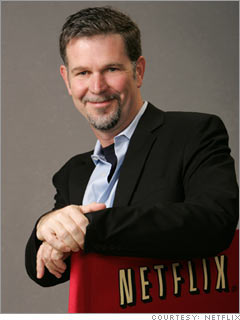
“I messed up,” began Netflix CEO Reed Hastings in a September 18th blog post and email to customers. Such a straightforward and personal acceptance of responsibility should have set the tone for an apology that would make it easy for customers to forgive and forget, so why did it only fuel a backlash against his company?
As you likely know by now, Hastings was not apologizing for raising prices and complicating things for his customers by separating DVD rental and streaming services. No, he apologized for the way the company mishandled the way they broke the news. “It is clear from the feedback over the past two months that many members felt we lacked respect and humility in the way we announced the separation of DVD and streaming, and the price changes,” the post continued. “That was certainly not our intent, and I offer my sincere apology.”
Hastings went on to announce even more changes, separating the services into two companies with two pay structures, demonstrating that he clearly hadn’t heard any of the original concerns. He even seemed to poke fun at the fact that they had raised prices instead of confronting it head on, creating an even wider chasm in appearing not to take concerns seriously.
But what could he have done differently? Public apologies are never easy, but could he have done better? Here are some things we can learn from Hastings’ ordeal, should we ever find ourselves in a similar unenviable position.
- Be authentic – Hastings’ apology was hardly clear or unambiguous, making it much less effective. A direct response to customer concerns is the only way to make it clear you mean what you say, and the only way to avoid further apologies to clarify your statements.
- Respond immediately – Netflix announced their plans to increase rates on July 12th, and Hastings’ half-hearted apology came September 18th. As the immediate onslaught of 5,000+ comments in response to his blog post will attest, his mea culpa could have come earlier. The lag time made it appear his hand was finally forced.
- Be personal – Hastings could certainly have appeared more contrite if he had looked his customers in the eye in a press conference, and invited questions. Instead, he pushed out an unexpected and faceless email with carefully constructed language, and engaged in no immediate Q&A.
- Be humble – Hastings titled his post, “An Explanation and Some Reflections”, which immediately strikes a defensive tone. “An Apology and Some Reconsiderations” may have gone further to win back the hearts of those he may have alienated. He declared many new changes to be “necessary”, which implies his audience feel as if they have no voice (and has since gone back on some of the company’s major plans, now demonstrating that they were never necessitated in the first place).
As is the case with any CEO, Hastings is free to run his company as he sees fit, and his customers and stakeholders will decide how he’s doing. But we can all learn some lessons when facing up to our mistakes, no matter how public or private. It will help us personally, and help the company maintain credibility long-term.
It’s tempting to dismiss clichés such as, “actions speak louder than words”, but in a leadership role, it’s vital to understand that your personal and corporate behavior will influence your entire organization.
 Now, we’re not going to state the obvious about engaging in illegal or inappropriate activities that will put the company at risk. The behavior we want to focus on here is more subtle. We’re not telling you to change your lifestyle, just to remain aware that small things can make a big difference in the way you influence group behavior.
As a leader, you want and expect the respect of those around you. With that respect comes responsibility, as those who look to you for behavioral signals will – naturally – follow your lead.
- Do you expect your employees to remain positive, excited to be at work? Then you must appear positive and excited by way of motivation.
- What are your values as a company? The words that you want others to use when describing your company should also describe the way you conduct your daily business.
- Are you actively involved in the daily business of all departments? Don’t micromanage, but remain available and communicate openly, transparently.
- What do you want your company to have their sights set on? Make sure you are focusing on that same goal in your own work.
It’s the golden rule: Do unto others as you would have them do unto you. The way you perform and the expectations you have of the group are vital to the culture of your organization. Make sure to meet or exceed the expectations you place on others’ performance.
Remember, people are watching. Yes, part of leadership is about making decisions for the company, but you can also help individuals make positive decisions by managing your own words and behavior for a positive outcome.
Actions DO speak louder than words, so show – don’t just tell.
The rate at which technology and media platforms are evolving is increasing to the point where it’s a full time job just to keep up on trends and new offerings. With all the hype that comes with launch after launch of next-gen hardware and functionality, how do you filter out the noise and know what truly is the next big thing? More importantly, how do you know if it’s right for your business?
 It’s called Shiny Object Syndrome. It takes your eye off the ball, and distracts you from what’s important. And we’re all guilty of it from time to time. We never lose that desire to be the first kid on the block with that cool new toy, so it’s tempting to give in to the hype and thrill of discovery. But what if something bigger and better comes along tomorrow? It’s vital to your success that you’re able to know what’s right for you.
How can you stay immune to Shiny Object Syndrome? Of course, there’s no vaccine, but these steps will help take a measured approach to jumping on the latest and greatest.
Take a deep breath. Don’t make any immediate decisions. The initial hype that comes with any launch is overwhelming, and that’s what the marketers are counting on. Complete some things on your to-do list. They might not be as exciting, but you’ll feel better about what you’re already doing once you see them through.
Seek advice. You’re not in this alone. Consult your board, or ask any of the tech savvy people you’ve hired for their expertise. They’ll keep you focused on your company’s business priorities, and will be able to tell you if you’re going to be derailed.
How much will it cost? There’s a learning curve that comes with any new technology or product. Do you have the manpower and monetary cushion to dedicate? Will it pay off in the end?
Keep it simple. If this is the right solution for your business, it won’t over-complicate things. If it’s not simple, you might find your workforce and your customers frustrated and overwhelmed.
It’s good to keep your eyes on the shifting landscape to look for new opportunities. And your company won’t get very far if you’re not willing to try new things and take the occasional risk. But stay focused. Newness wears off. And if something has staying power, it won’t matter that your company was the first to get there. It only matters that you are the company that makes the best use of the product or offering in a way that makes the most sense.
|